Task Initiation
The ability to begin. Executive function sends the signal that moves you from thinking about a task to actually starting it. When this process is disrupted, you get stuck in the gap between knowing and doing.
When your brain cannot get started, it is not a matter of willpower. Understanding executive dysfunction is the first step toward working with your brain instead of against it.
You know what you need to do. You want to do it. Maybe you have been thinking about it for hours. But your brain will not cooperate. The signal to start just does not fire.
This is executive dysfunction. It is the experience of being stuck between intention and action, not because you lack desire, but because the neurological bridge between wanting and doing is not working the way it should.
It can look like staring at a blank document you need to fill out, standing in a room knowing something needs to be done but unable to choose what, or spending an entire afternoon circling a task without ever beginning it. The frustration is real, and it is exhausting.
Executive function is the brain's management system. It coordinates the mental processes that allow you to plan, begin, and complete tasks. When it works well, you barely notice it. When it does not, everything feels harder than it should.
The ability to begin. Executive function sends the signal that moves you from thinking about a task to actually starting it. When this process is disrupted, you get stuck in the gap between knowing and doing.
Holding steps in mind while you work. Executive function lets you remember what comes next without losing track of where you are. Without it, multi-step tasks feel impossible to navigate.
Adapting when plans change. When something unexpected happens, executive function helps you shift strategies. Difficulty here means small disruptions can derail an entire day.
Tracking your own progress. Executive function lets you step back and assess how things are going, whether you are on track, and what needs to change. Without it, you lose sight of the bigger picture.
"Executive dysfunction is not laziness. It is a genuine difficulty with the brain's management system."
One of the most common misunderstandings about executive dysfunction is that it stems from a lack of motivation. People who experience it often have plenty of motivation. They care deeply about the things they cannot start. They feel urgency, desire, even desperation to act.
The problem is not in the wanting. It is in the bridge between intention and action. That bridge is built by executive function, and when it is unreliable, willpower alone cannot compensate. You cannot force a neurological process to work by trying harder, any more than you can will a broken bone to heal faster.
This is why common advice like "just start" or "break it into smaller steps" often falls short. The advice assumes the bridge is intact and you simply need to cross it. For people with executive dysfunction, the bridge itself needs support.
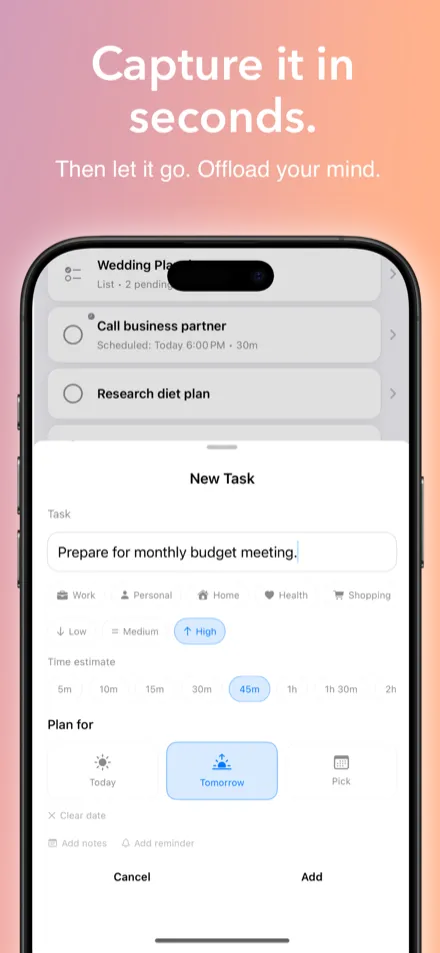
If internal executive function is unreliable, the most effective strategy is to build external structure that fills the gap. Instead of demanding that your brain provide organization, planning, and initiation on its own, you give it scaffolding to lean on.
External structure replaces the internal structure that executive function normally provides. Reminders take over for unreliable memory. Simple lists reduce the number of decisions required to start. Reduced choices lower the activation energy needed to begin.
The key is that this structure must be genuinely simple. A complex productivity system creates its own executive function demands, which defeats the purpose entirely. The best external tools are the ones that ask the least from the brain they are trying to help.
No decisions needed to save a thought. Open the app, type what is on your mind, and close it. No categories to choose, no priorities to assign, no forms to fill out. The moment between thinking and capturing is as short as possible.
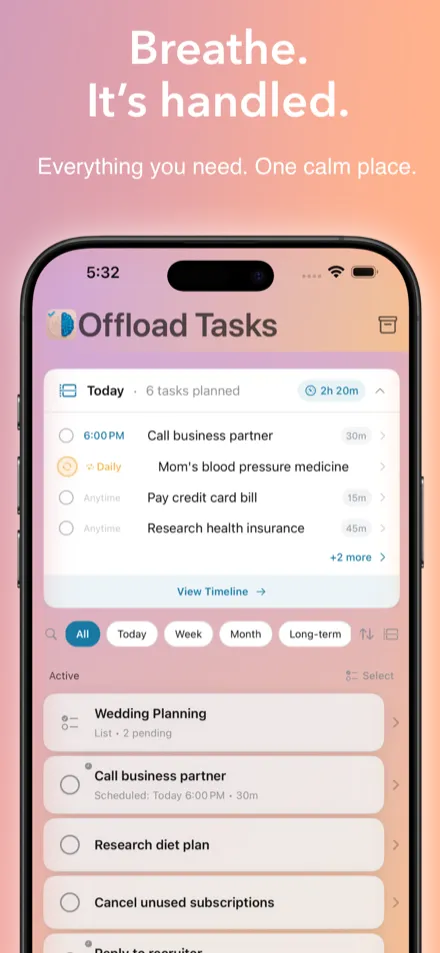
Reminders and schedules provide the scaffolding your brain needs. Instead of relying on internal cues that may not fire, Offload sends gentle prompts at the right time, giving your executive function the external nudge it needs.
Capacity planning prevents overwhelming task lists. By helping you see how much you have planned versus how much you can realistically handle, Offload keeps your day from becoming a wall of tasks too tall to climb.
Calm notifications that nudge without shame. When you drift away from a task, Offload does not scold or pressure. It simply reminds you, quietly, that something is waiting when you are ready to return to it.
"The right tool does not demand more from your brain. It asks less."
Offload provides the external structure your brain needs, without the complexity it does not.