Working Memory Limits
Research suggests we can hold only 4 to 7 items in working memory at once. Beyond that, things start falling out.
The scientific explanation for why your brain feels full, and how externalizing your tasks can bring real relief.
Cognitive load is the total amount of mental effort being used in working memory at any given moment. Think of working memory as your brain's RAM: limited capacity, constantly being written to and read from.
When cognitive load exceeds capacity, things start to break down. You forget things. You make mistakes. You feel overwhelmed even when technically "nothing happened."
This is not a character flaw. It is how human brains work. We have real, physical limits on how much we can hold in mind at once.
Research suggests we can hold only 4 to 7 items in working memory at once. Beyond that, things start falling out.
Unfinished tasks occupy mental space. Your brain keeps them active, cycling through reminders, until they are resolved or externalized.
Every pending task, decision, or commitment takes a small piece of your mental bandwidth, even when you are not actively thinking about it.
Making choices depletes the same mental resources used for self-control and focus. More decisions mean less capacity for everything else.
"Your brain is not meant to be a storage system. It is meant to process, not remember."
Imagine your brain as a computer running with dozens of browser tabs open. Each tab represents something you need to remember: a task, a commitment, an idea, a worry.
Even when you are focused on one thing, the other tabs are running in the background, using memory and processing power. They slow everything down, create that constant hum of mental noise, and eventually the whole system starts to lag.
The solution is not to think harder or try to remember better. It is to close some tabs: move information out of your head and into an external system you trust.
Cognitive offloading is the practice of using external tools to reduce the burden on working memory. It is one of the most effective strategies for managing mental load.
When you write something down in a system you trust, your brain can actually let go of it. The mental tab closes. The background processing stops.
But for this to work, the external system needs to be trustworthy. If you do not trust it to remind you, your brain will keep cycling through the thought anyway.
You need to capture thoughts the moment they occur. If the system is not accessible, your brain cannot rely on it.
The slower it is to record a thought, the more likely you will not bother. Speed matters for building trust.
If you are not confident the system will remind you when needed, you will keep reminding yourself, defeating the purpose.
A system that requires constant organization creates its own cognitive load. Simple is better than comprehensive.
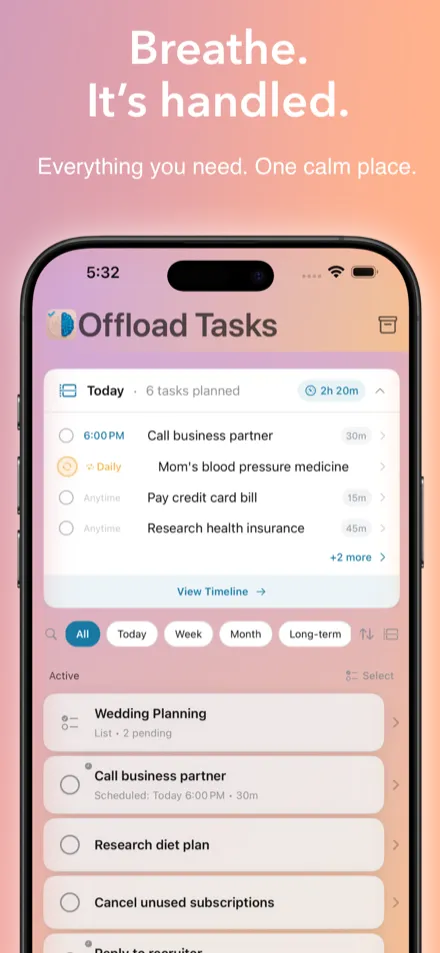
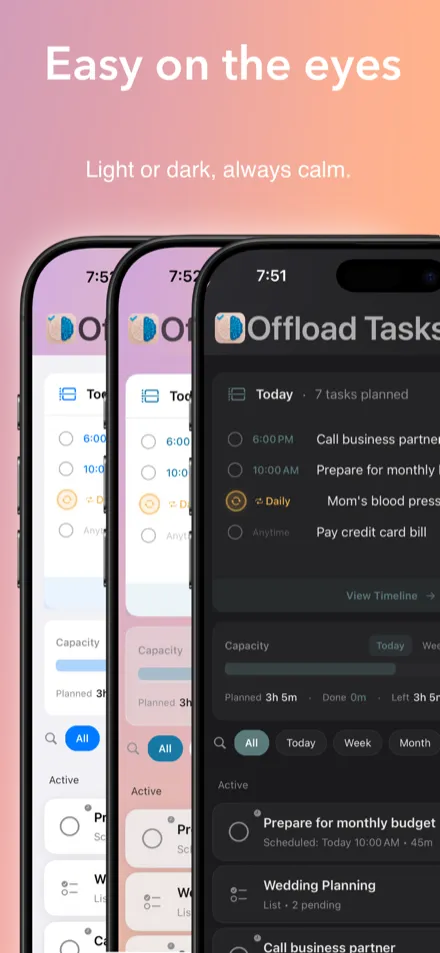
Offload is designed to be the external system your brain can actually trust.
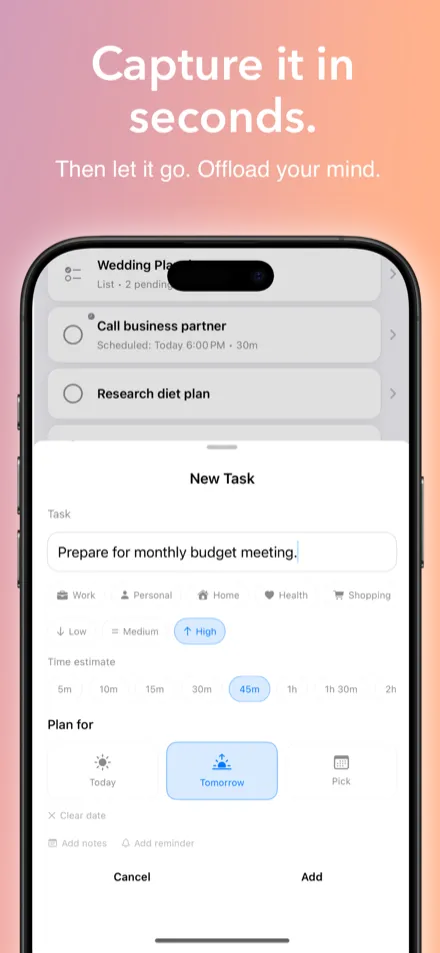
Open the app. Type your thought. Close the app. The thought is captured in under five seconds, with no required fields or decisions to make.
Set a reminder if you want. Or do not. Either way, the thought is safely stored, available when you need it, invisible when you do not.
The goal is simple: help your brain close tabs. Reduce the background noise. Free up mental space for what actually matters right now.
"The goal is not to remember more. The goal is to need to remember less."
Give your brain permission to let go. Try Offload.