Avoidance
You stop checking your task list because seeing everything is overwhelming. The app becomes something to avoid.
When your to-do list stops being helpful and starts being a source of stress, something needs to change.
Task anxiety is that familiar tightness when you think about everything you need to do. It is the dread of opening your task app. The guilt that follows you through the weekend because work is waiting.
For many people, the to-do list that was supposed to bring clarity has become its own source of stress. Instead of feeling organized, they feel constantly behind.
This is not a personal failing. It is often a sign that the system itself is working against you.
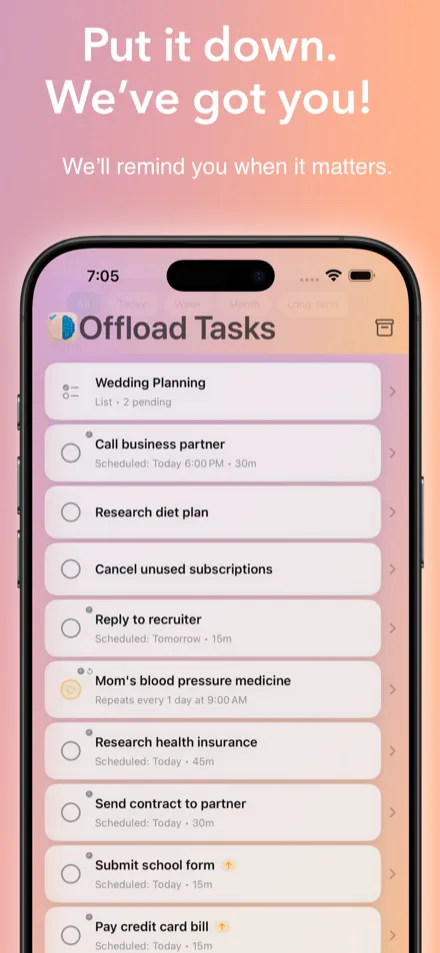
You stop checking your task list because seeing everything is overwhelming. The app becomes something to avoid.
Even when relaxing, there is a nagging sense that you should be doing something. You cannot fully rest.
Missing a deadline or skipping a task triggers shame. The shame makes it harder to face the list, creating a cycle.
So many things need doing that you cannot decide where to start. You end up doing nothing, which adds more guilt.
Completing tasks brings no relief because more always appear. There is no sense of progress or accomplishment.
Thinking about your task list causes actual physical symptoms: tight shoulders, clenched jaw, shallow breathing.
"A task system should reduce anxiety, not create it."
We live in a culture that celebrates busyness. Productivity apps often reinforce this by gamifying output, tracking streaks, and implicitly suggesting that more is always better.
This creates pressure to constantly optimize, to squeeze more from each day, to never waste a moment. For people already prone to anxiety, this becomes exhausting.
The truth is: you cannot optimize your way to peace. No system will ever help you do everything. The goal should not be maximum output but sustainable wellbeing.
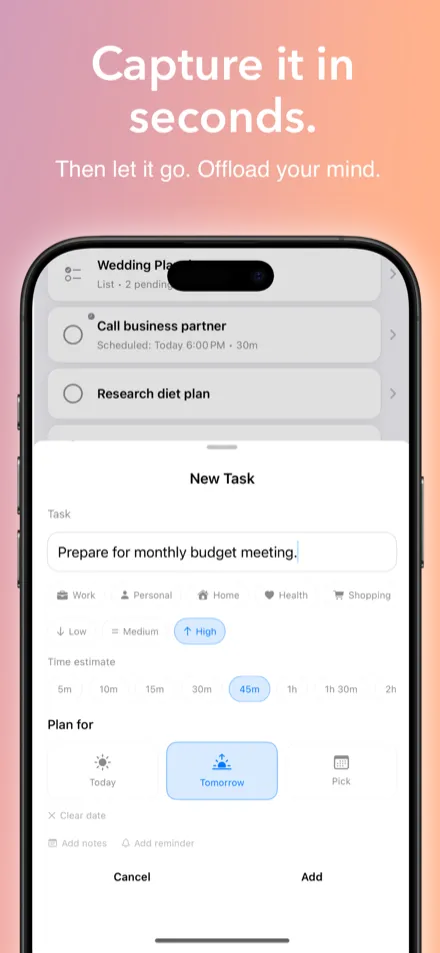
What if your task system was designed for calm instead of productivity?
What if it helped you capture thoughts without demanding immediate organization? What if rescheduling felt easy instead of shameful? What if the interface itself communicated that you are doing enough?
This is what Offload tries to be. Not a tool to help you do more, but a quiet place to set down the mental weight you are carrying.
No red badges, no overdue warnings, no metrics showing how behind you are. Tasks simply exist, waiting until you are ready.
Get thoughts out of your head immediately. No decisions required. The relief comes from externalizing, not organizing.
Reschedule tasks with one tap. No lectures, no friction. Plans change, and that is completely fine.
See how much you have planned. Overcommitment becomes visible before it becomes overwhelming.
Soft colors, clean design, no visual noise. Opening the app should feel like taking a breath, not bracing for impact.
No streaks, no points, no achievements. Your worth is not measured by task completion rates.
"The best task system is one that helps you think less about tasks."
Try an approach designed for calm, not maximum output.