Compulsive Checking
You check your task list, calendar, or inbox repeatedly, looking for something you might have missed.
The constant worry that something important will slip through the cracks. The anxiety that keeps you checking and rechecking.
You know the feeling. That nagging sense that you are forgetting something important. The compulsion to check your task list one more time, even though you checked it five minutes ago.
This is not productive vigilance. It is anxiety masquerading as responsibility. And it drains your energy without actually helping you get things done.
The fear of forgetting is exhausting because it never actually resolves. There is always something else that might be slipping through the cracks.
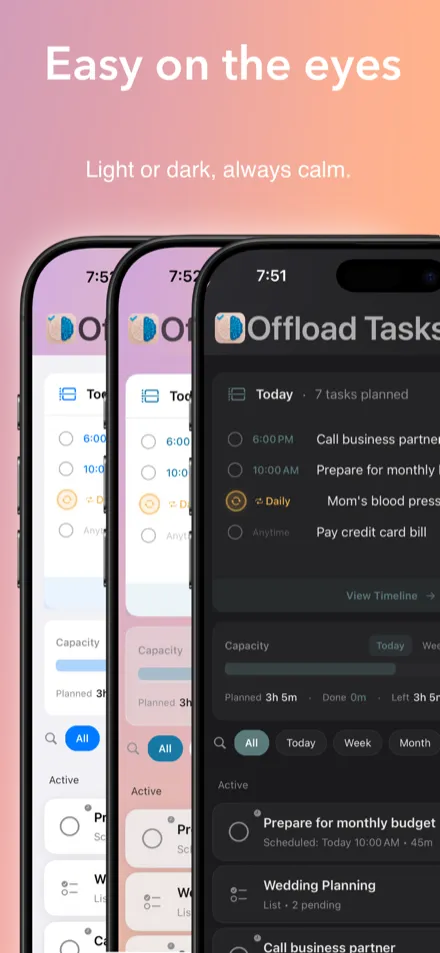
You check your task list, calendar, or inbox repeatedly, looking for something you might have missed.
Even during downtime, part of your mind is running through what you should be doing or might be forgetting.
You use several apps, notebooks, and reminders because you do not trust any single system to catch everything.
You write everything down, even trivial things, because you cannot trust yourself to remember.
You set multiple reminders for the same thing, just to make sure you will not forget.
Thoughts about tasks intrude at night. You sometimes wake up with sudden anxiety about something forgotten.
"The problem is not that you forget things. The problem is that you cannot trust yourself, or your system, to remember."
The fear of forgetting usually comes from experience. At some point, something important did slip through the cracks. There were consequences. Now your brain is hypervigilant, trying to prevent it from happening again.
The irony is that this hypervigilance creates its own problems. The mental energy spent worrying about forgetting is energy not spent on actually doing things. The constant checking becomes another form of avoidance.
And the scattered systems that result from not trusting any single tool make forgetting more likely, not less.
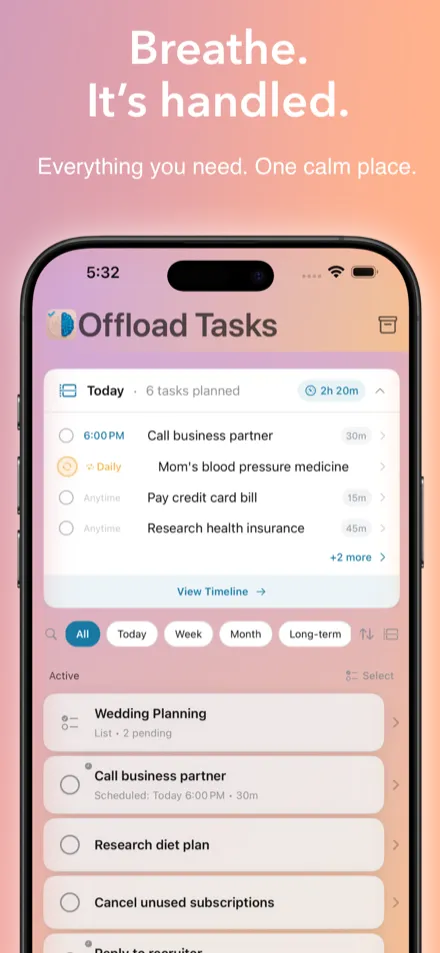
When you truly trust your task system, something changes. The background anxiety quiets down. You can be present in what you are doing because you know the system has the rest.
Trust does not mean the system is perfect. It means you believe that if something is in the system, you will be reminded when you need to be. And if something is not in the system, you can add it instantly.
This trust has to be earned. It comes from a system that is fast to capture, reliable in reminding, and simple enough to actually use consistently.
Open, type, close. Under five seconds. When capture is this fast, you actually use it, and nothing slips away.
Set a reminder and trust it will arrive. No complex settings, no unreliable notification systems.
Everything in one place. No need to check multiple apps. If it is important, it is in Offload.
Your tasks are on all your devices. Capture on your phone, see it on your iPad, trust it is everywhere.
No complexity to learn or maintain. The system stays usable, so you keep using it, so trust builds.
Reminders that feel helpful, not alarming. Snooze easily if now is not the right time.
"Peace of mind comes not from remembering everything, but from trusting that you do not need to."
Try a system designed to earn your trust and quiet the anxiety.