Household Admin
Bills, repairs, maintenance schedules, grocery lists, cleaning supplies. The endless logistics of keeping a home running.
The invisible, exhausting work of keeping track of everything. The weight of being the one who remembers.
Someone has to remember the dentist appointments, the birthday cards, the permission slips. Someone has to know when the car registration expires and when to schedule the vet visit.
This is mental load: the invisible labor of tracking, planning, and anticipating. The work that happens in your head, often unnoticed by everyone except the person doing it.
It is exhausting. Not because any single thing is hard, but because it never stops. Every item resolved is replaced by three more.
Bills, repairs, maintenance schedules, grocery lists, cleaning supplies. The endless logistics of keeping a home running.
School events, medical appointments, activity schedules, playdates, birthday parties. Keeping everyone where they need to be.
Thinking ahead: what will we need next week, next month? What is coming up that requires preparation?
Remembering to check in, send thank-you notes, acknowledge important dates. Maintaining relationships requires tracking.
Projects, deadlines, meetings, follow-ups. Professional responsibilities that layer on top of personal ones.
Doctor's appointments, prescriptions, exercise schedules. Taking care of yourself often comes last.
"The work of remembering is real work, even when no one can see it."
Mental load is not a problem you can solve once. It is a continuous stream. You cannot empty the list because life keeps generating more items.
This can feel relentless. There is no finish line, no moment where you can say "I am done managing things." Rest feels like falling behind.
The goal, then, is not to complete the mental load. It is to find a sustainable way to carry it. To externalize enough that your mind can rest, even when the list cannot.
The thoughts come at the worst times. In the shower, you remember something for work. While falling asleep, you think of a question for the doctor.
If you cannot capture these thoughts quickly, they add to the load. You either forget them (and worry about that) or try to hold them in mind (and lose sleep).
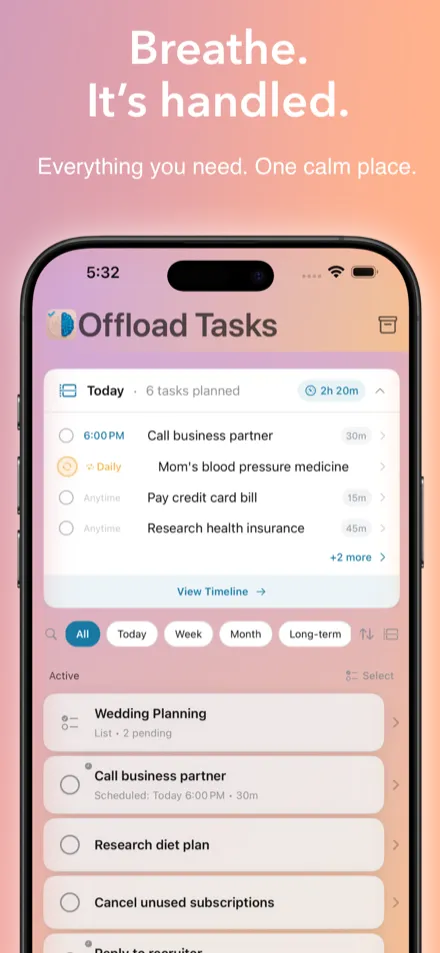
Offload is designed for these moments. Open the app in five seconds, type the thought, close the app. The thought is safely stored. Your mind can let go.
You cannot eliminate mental load. But you can externalize it. When everything lives in a trusted system instead of your head, there is less to carry moment to moment.
This creates breathing room. Space for actual rest. The ability to be present with your family or focused on your work, without the background hum of everything else you need to remember.
It is not about doing more. It is about thinking less about what needs to be done.
Thought strikes at 2am? Capture it in seconds and go back to sleep. The system will hold it for you.
Just dump it in. You can organize later if you want, or never. The capture is what matters.
Set reminders for things that need to happen at a specific time. Let the system do the remembering.
Monthly bills, weekly chores, annual renewals. Set them once and trust they will appear when needed.
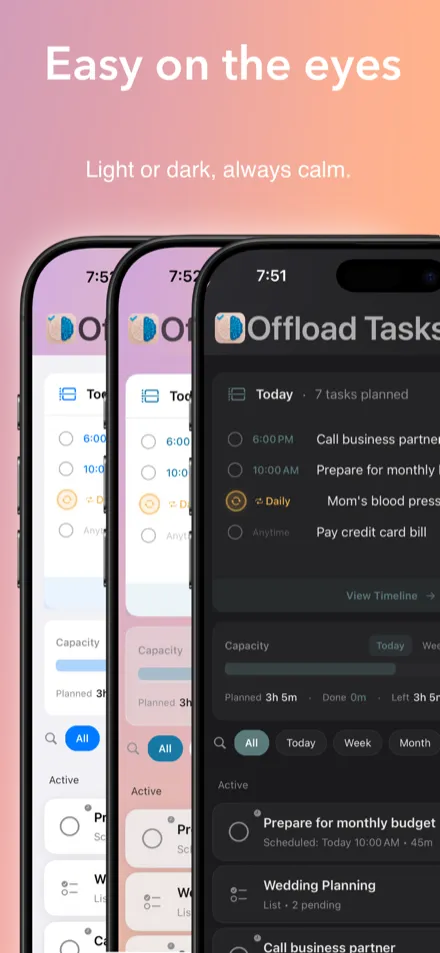
See how much you have committed to. Protect yourself from taking on too much.
Whatever device is nearest, your tasks are there. Capture anywhere, access everywhere.
"You deserve a place to put things down. You deserve a mind that can rest."
Give your mind a break. Let Offload carry the remembering.